Types of Nursing Certifications Explained
All nurses learn the basics of medical care in nursing school and get the title of “registered nurse” after graduation. However, nurses can also distinguish themselves further in specialty fields. The more we discover about the human body, illness, and treatments, the more specialized medical providers become. It can take an entire career to learn all there is to know about one specialty in medicine. When you have a nursing certification, you let your patients and employers know you are an expert in your field.
What Are Nursing Certifications and Why Are They Important?
Nursing certifications can be sought after a nurse has some experience in their specialty. Some require coursework, but most can be achieved through an exam, which may be done remotely or in the presence of a proctor. All certifications come with a one-time fee, but some employers cover this cost for their staff.
Plenty of nurses go their entire careers without earning a specialty certification. But for nurses who want recognition, higher pay, and leadership responsibilities, becoming certified can mark a crucial step in that journey. With certified proof of your expertise, you know you can give excellent care to every one of your patients.
Required Nursing Certifications
These certifications won’t put more letters behind your name, but many are required to work in acute care settings. Some, like basic life support, are required in almost all health settings, while others may only come into play in critical care or pediatric environments.
If employed by a health facility, you may earn these certifications onsite at no cost to you. Most healthcare facilities in the U.S. follow the American Heart Association’s certification recommendations, but some may offer Red Cross courses.
Basic Life Support (BLS)
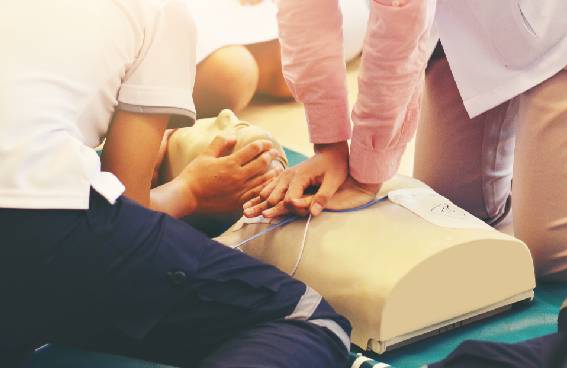
In a basic life support certification class, nurses learn basic triage procedures like when to call for help, how to operate an automated external defibrillator (AED), and cardiopulmonary resuscitation techniques (CPR) for patients of all ages. Most BLS classes also teach choking first aid for adults, children, and infants.
Cost: $57 if not covered by employer
Time commitment: 2-5 hours
Where to get certified: American Heart Association BLS Courses
Advanced Cardiovascular Life Support (ACLS)
In advanced cardiac life support, instructors teach providers how to handle an emergency code situation, recognize warning signs of impending cardiac arrest, and algorithms designed to ensure the best patient outcome. The class includes lecture, hands-on practice, and several mock-code situations.
Cost: $200 if not covered by employer
Time commitment: 6-13 hours depending on course and breaks
Where to get certified: American Heart Association ACLS Courses
Pediatric Advanced Life Support (PALS)
Pediatric advanced life support offers the same instruction as an ACLS course, with a focus on pediatric patients. An infant, for example, needs different amounts of medications and fluid resuscitation than an adult. PALS students will learn pediatric-specific warning signs and emergency management.
Cost: $250 if not covered by employer
Time commitment: 8-17 hours depending on course and breaks
Where to get certified: American Heart Association PALS Courses
Pediatric Emergency Assessment, Recognition, and Stabilization (PEARS)
A PEARS certification offers expertise one step below PALS. PEARS students learn how to identify and stabilize pediatric patients, but do not go in depth on medication and code algorithms. This certification is often required to work on a pediatric hospital unit, whereas a PALS certification would be required for an intensive care unit.
Cost: $100-$250 if not covered by employer
Time commitment: 8-17 hours depending on course and breaks
Where to get certified: American Heart Association PEARS Courses
Specialty Nursing Certifications for Registered Nurses
Registered nurses (RNs) can earn these certifications if they meet all other eligibility requirements. These specialty certifications are typically not required for an RN position, but they can make a nursing resume more competitive and result in higher pay.
Ambulatory Care Nursing Certification (AMB-BC)
Ambulatory care nurses treat patients in an outpatient setting, which may include primary care offices, same-day surgery, and urgent care.
Cost: $295-$395
Eligibility requirements:
- RN license
- Two years full-time experience as a registered nurse
- At least 2,000 hours of clinical practice in ambulatory care nursing within the last 3 years
- 30 hours of continuing education in ambulatory care nursing within the last 3 years
Where to get certified: American Nurses Credentialing Center
Cardiac Vascular Nursing Certification (CV-BC)
Cardiac care nurses work with patients who have an illness relating to their cardiovascular system. They may work on a cardiac unit or in cardiac catheterization procedures.
Cost: $295-$395
Eligibility requirements:
- RN license
- Two years full-time experience as a registered nurse
- At least 2,000 hours of clinical practice in cardiac-vascular nursing within the last 3 years
- 30 hours of continuing education in cardiac-vascular nursing within the last 3 years
Where to get certified: American Nurses Credentialing Center
Certified Managed Care Nurse (CMCN)
Nurse care coordinators assist patients from a high level by arranging their medical care across all members of a patient’s health team.
Cost: $250
Eligibility requirements:
- RN license
- Completion of the “Comprehensive Introduction to Managed Care Nursing” curriculum available from the American Association of Managed Care Nurses (AAMCN), OR
- An approval of current care coordination experience by the ABMCN Board of Directors
Where to get certified: American Association of Managed Care Nurses
Certified Diabetes Care and Education Specialist (CDCES)
Nurses in diabetes care educate their patients on all the complex aspects of diabetes management, like blood sugar measurement and carbohydrate calculations.
Cost: $350
Eligibility requirements:
- RN license
- Two years full-time experience as a registered nurse providing diabetes care and education
- At least 1,000 hours providing diabetes care and education within the last 5 years, with 20% of those hours done in the past year
- A minimum of 15 hours of diabetic continuing education
Where to get certified: Certification Board for Diabetes Care and Education
Critical Care Nursing Certification (CCRN)
Critical care nurses work in an acute medical setting like an intensive care unit or an emergency department.
Cost: $250-$365
Eligibility requirements:
- RN license
- At least 1,750 hours of direct care of critically ill patients within the last two years, with 875 of those hours done in the past year, OR
- A minimum of 2,000 hours of direct care of critically ill patients within the last five years, with 144 of those hours done in the past year
Where to get certified: American Association of Critical-Care Nurses
Holistic Nursing Certification (HN-BC)
Holistic nurses put focus on the mind-body-spirit connection to treat every aspect of their patients’ health.
Cost: $400-$495
Eligibility requirements:
- RN license
- Graduation from an accredited nursing program
- One year full-time experience in holistic nursing practice within the last 5 years
- At least 2,000 hours of holistic nursing practice within the last 5 years
- 48 hours of continuing education in holistic nursing practice within the last 2 years
Where to get certified: American Holistic Nurses Credentialing Corporation
Hospice Nursing Certification (CHPN)
Hospice nurses care for people in their last days, weeks, and months of life. They focus on pain control and overall quality of life for their patients.
Cost: $285-$415
Eligibility requirements:
- RN license
- At least 500 hours of clinical practice in hospice and palliative care nursing within the last 12 months, OR
- At least 1,000 hours of clinical practice in hospice and palliative care nursing within the last 2 years
Where to get certified: Hospice and Palliative Credentialing Center
Medical-Surgical Nursing Certification (CMSRN)
Medical-surgical nurses treat patients in the hospital during illness or after an injury or surgery. This broad specialty can also be certified by the American Nurses Credentialing Center under the name “Medical-Surgical Nursing Certification (MEDSURG-BC).”
Cost: $267-$395
Eligibility requirements:
- RN license
- Two years full-time experience as a registered nurse in a medical-surgical setting
- At least 2,000 hours of clinical practice in medical-surgical nursing within the last 3 years
Where to get certified: Academy of Medical-Surgical Nurses (AMSN)
Neonatal Nursing Certification (CCRN-Neonatal)
Neonatal nurses treat premature infants in a critical-care hospital setting. Nurses can also receive certification through the National Certification Corporation under the title RNC Certification for Neonatal Intensive Care Nursing (RNC-NIC).
Cost: $250-$365
Eligibility requirements:
- RN license
- At least 1,750 hours of direct care of critically ill neonatal patients within the last two years, with 875 of those hours done in the past year, OR
- A minimum of 2,000 hours of direct care of critically ill neonatal patients within the last five years, with 144 of those hours done in the past year
Where to get certified: American Association of Critical-Care Nurses
Informatics Nursing Certification (NI-BC)
Nursing informatics is growing in importance as more and more medical systems rely on technology. Nurses in this specialty work with computer programs and equipment to ensure efficiency and safety.
Cost: $295-$395
Eligibility requirements:
- RN license
- Minimum of a bachelor’s degree in nursing or equivalent field
- 2 years full-time experience as a registered nurse
- 30 hours of continuing education in informatics nursing within the last 3 years, AND
- At least 2,000 hours of clinical practice in informatics nursing within the last 3 years, OR
- At least 1,000 hours in informatics nursing in the last 3 years plus a minimum of 12 semester hours of graduate-level academic credit in informatics courses, OR
- A completed graduate program in informatics nursing
Where to get certified: American Nurses Credentialing Center
Oncology Certified Nurse (OCN)
Oncology nurses care for patients who have cancer of any type. Certification in this field is especially important because of the need to handle chemotherapy.
Cost: $300-$420
Eligibility requirements:
- RN license
- 2 years full-time experience as a registered nurse in the last 4 years
- At least 2,000 hours of clinical practice in oncology nursing within the last 2 years
- 10 hours of continuing education in oncology nursing within the last 3 years
Where to get certified: Oncology Nursing Certification Corporation
Psychiatric-Mental Health Nursing Certification (PMH-BC)
Psychiatric nurses treat patients with mental disorders. These disorders can require outpatient care, temporary acute supervision, or even permanent, full-time treatment.
Cost: $220-$395
Eligibility requirements:
- RN license
- 2 years full-time experience as a registered nurse
- At least 2,000 hours of clinical practice in psychiatric–mental health nursing within the last 3 years
- 30 hours of continuing education in psychiatric–mental health nursing within the last 3 years
Where to get certified: American Nurses Credentialing Center
Certified in Public Health (CPH)
Public health nurses focus on the overall health of a community or population, and are often instrumental in managing care after a natural disaster.
Cost: $250-$385
Eligibility requirements:
- RN license
- A bachelor’s degree
- 5 years experience as a public health nurse
Where to get certified: National Board of Public Health Examiners
School Nursing Certification (NCSN)
School nurses manage the medical needs of a school’s population during the academic day. They administer scheduled medications and triage injuries and illnesses as they arise.
Cost: $360
Eligibility requirements:
- RN license
- A Bachelor of Science in Nursing
- At least 1,000 hours of clinical practice in school nursing within the last 3 years
Where to get certified: National Board for Certification of School Nurses (NBCSN)
Trauma Nursing Certification (TCRN)
Trauma nurses typically work in the emergency room and treat critical injuries and illnesses. Nurses in this specialty can also get certified through the Emergency Nurses Association.
Cost: $195-$450
Eligibility requirements:
- RN license
- 2 years full-time experience as a registered nurse (recommended, not required)
Where to get certified: Board of Certification for Emergency Nursing (BCEN)
Wound Care Nursing Certification (CWCN)
Wound care nurses work to manage surgical, pressure, and traumatic wounds. Since wounds can be extremely diverse, wound nurses have many options for certification, which they can also get through the National Alliance of Wound Care and Ostomy® (NAWCO) or the American Board of Wound Healing.
Cost: $395
Eligibility requirements:
- RN license
- A Bachelor of Science in Nursing
- Graduate from an accredited nursing education program, OR
- 1500 hours of nursing experience in desired specialty
- 50 hours of continuing education in desired specialty within the last 5 years
Where to get certified: Wound, Ostomy and Continence Nursing Certification Board (WOCNCB)