Oncology Nurse Career Overview
What Is an Oncology Nurse?
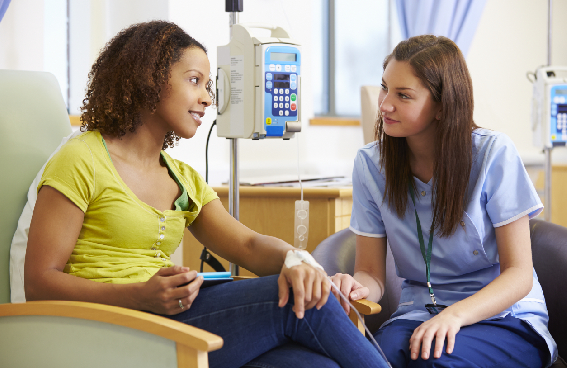
Oncology nurses see patients during a frightening and tumultuous time of their lives. A cancer diagnosis is never welcome news, and oncology nurses help treat, educate, and guide patients and their families through testing, treatment, and recovery.
Also called hematology/oncology nurses (Heme/Onc), oncology nurses treat patients of all ages. Oncology nursing can be an emotionally challenging career choice, but many find it incredibly rewarding. Whether administering life-saving treatment, answering nervous questions, or preparing patients for the road ahead, Heme/Onc nurses can help make a difficult time more tolerable and help cancer patients become cancer survivors.
How Long to Become?
2-4 Years
Job Outlook
6% increase from 2022 to 2032
Average Salary
$94,480
Where Do Oncology Nurses Work?
With all the varied aspects of cancer care, oncology nurses have a lot of workplace choices. Some common options include:
- Chemotherapy infusion centers
- Extended care facilities
- Home care agencies
- Hospice facilities/home care
- Hospitals
- Outpatient cancer centers
- Physician offices
- Private medical clinics
- Universities
In the hospital, oncology nurses see patients in the acute phase of their cancer. They may be admitted for a bone marrow transplant, an infection, or pain control, among other reasons. In outpatient clinics and medical offices, cancer patients attend scheduled appointments for checkups, lab work, and treatment infusions. Some cancer patients may be eligible for home health, in which case nurses visit them at home to administer treatment and perform assessments.
Cancer research has grown exponentially over the past couple of decades, and research positions are a great option for an oncology nurse with experience. Research oncology nurses typically work on a team that is affiliated with a university.
Oncology nurses may choose to focus on a specific aspect of cancer care:
- Bone marrow transplant
- Breast oncology
- Chemotherapy/treatment infusion
- Gastrointestinal oncology
- Genetic counseling
- Gynecologic oncology
- Hematology
- Hepatic oncology
- Immunotherapy
- Neuro-oncology
- Radiation oncology
- Surgical oncology
Each of these subspecialties requires a specific skill set and knowledge base, and a nurse who chooses an oncology subspecialty can become an expert in that field.
What Does an Oncology Nurse Do?
Oncology nurses perform many of the same daily tasks as any other nurse, with some additions. Chemotherapy certification is often required by oncology units and infusion centers, as chemotherapy must be handled with extreme care.
Some typical oncology nursing tasks may include:
- Assistance in procedures like bone marrow biopsies
- Blood and other bodily fluid collection for laboratory testing
- Central line management (like ports and PICCs)
- Chest tube management
- Collaboration with other health team members
- Coordination of care with other departments
- Dressing changes
- Emergency resuscitation
- Head-to-toe assessment
- Insertion and management of foley catheters
- IV insertion and maintenance
- Medication administration, including chemotherapy and other cancer therapies
- NG tube insertion and maintenance
- Patient and family education
- Patient hygiene and comfort
- Patient transportation
- Tracheostomy management
- Vital signs monitoring
Whether an oncology nurse sees a patient at home to take vital signs or administer chemotherapy during a hospital stay, they get to know the people they care for and form relationships with them. This rapport allows oncology nurses to truly support cancer patients in all aspects of care: physical, mental, and emotional. This can be a difficult ask of a nurse, but many cope with the challenges through the knowledge that they can make a huge difference in a patient’s treatment and recovery.
How Do I Become an Oncology Nurse?
Prospective oncology nurses must first graduate from an accredited nursing program. Currently, oncology nurses can graduate with an Associate Degree in Nursing (ADN) or a Bachelor of Science in Nursing (BSN). While both degrees earn the designation of a registered nurse (RN), many oncology units prefer to hire nurses with a BSN.
After earning their degree, nurses can apply for oncology jobs as graduate nurses (GNs). Many oncology offices and units hire GNs and begin to train them while they prepare to take their state licensing exam, the NCLEX. After GNs pass the NCLEX-RN, they become RNs and can work independently after they complete their facility’s orientation period.
When oncology nurses have some experience under their belt, they can choose to test for a specialty certification or return to school to earn an advanced practice degree. After graduating with a Master of Science in Nursing (MSN), nurses can practice as nurse practitioners (NPs). Nurses can earn their MSN in two years, but some prefer to go at a slower pace so they can work full-time while they study.
Oncology offers quite a few certification options. Through the Oncology Nursing Certification Corporation (ONCC), nurses can become an Oncology Certified Nurse (OCN). To be eligible for this certification, nurses must have:
- A current RN license
- 2,000 hours of adult oncology nursing practice within the last four years
- Two years of RN experience within the last four years
- A minimum of 10 contact hours of approved nursing continuing education in oncology within the last three years
The ONCC also offers several other oncologic specialty certifications:
Through the Oncology Nursing Society, nurses can earn their ONS/ONCC Chemotherapy Biotherapy Certificate. To take this course, nurses must have one year of experience administering chemotherapy or immunotherapy at least once a month.
How Much Does an Oncology Nurse Make Per Year?
Oncology nurses’ annual salary is comparable to any other RN in acute care. RNs make $94,480 per year on average, according to the U.S. Bureau of Labor Statistics (BLS). Salaries can change with location and experience, with a low-end average of $63,720 and a high-end of $132,680. Depending on the workplace type, employers may be able to offer higher or lower compensation:
- General Medical and Surgical Hospitals: $96,830
- Home Health Care Services: $87,430
- Offices of Physicians: $83,110
- Outpatient Care Centers: $102,640
The West Coast, New England states, and Alaska pay their nurses the best, but the cost of living in these areas can also be high. The lowest-paying states are in the Midwest and some Southeastern states.
Annual Mean Wage of Registered Nurses, by State
- $69,030 - $80,760
- $81,390 - $86,210
- $87,220 - $94,670
- $94,830 - $137,690
Blank areas indicate data not available
The top-paying areas for oncology nurses include:
- San Francisco-Oakland-Hayward, CA: $174,370
- Vallejo-Fairfield, CA: $171,620
- San Jose-Sunnyvale-Santa Clara, CA: $170,780
- Napa, CA: $166,180
- Sacramento–Roseville–Arden-Arcade, CA: $154,510
- Santa Rosa, CA: $152,930
- Modesto, CA: $145,190
- Santa Cruz-Watsonville, CA: $140,880
- San Luis Obispo–Paso Robles–Arroyo Grande, CA: $140,560
- Stockton-Lodi, CA: $138,420
Are Oncology Nurses in High Demand?
The American Cancer Society predicted nearly two million people would be diagnosed with cancer in 2023. Unfortunately, cancer rates continue to climb every year. While rates climb, new treatments also become available, and cancer survival continues to grow.
The United States is low on nurses across all specialties. The U.S. Department of Health and Human Services reports that 24% of U.S. hospitals have reported critical staffing shortages, and at least eight states have had to call in help from the military for staffing. With new cancer diagnoses and treatments needed, oncology nurses will continue to be in high demand.
Additional Resources for Oncology Nurses
To learn more about becoming an oncology nurse, these additional resources may help: