Nurse Insights: What Are the Career Opportunities in Oncology Nursing?
Are you considering a career in nursing, with a focus on oncology? If so, you’re in luck! There are many career opportunities available in this field, with various roles and specializations to choose from. In this article, we’ll explore the responsibilities and different paths you can take as an oncology nurse, as well as the specialties within the field. Read on to discover the many ways you can make a difference in the lives of cancer patients as an oncology nurse.
Nurse Insights
What Are the Career Opportunities in Oncology Nursing?
In our Nurse Insights series, experienced nurses offer an insider’s perspective on the nursing profession by addressing common questions, challenges, and triumphs of their careers.
Responsibilities and Roles of an Oncology Nurse
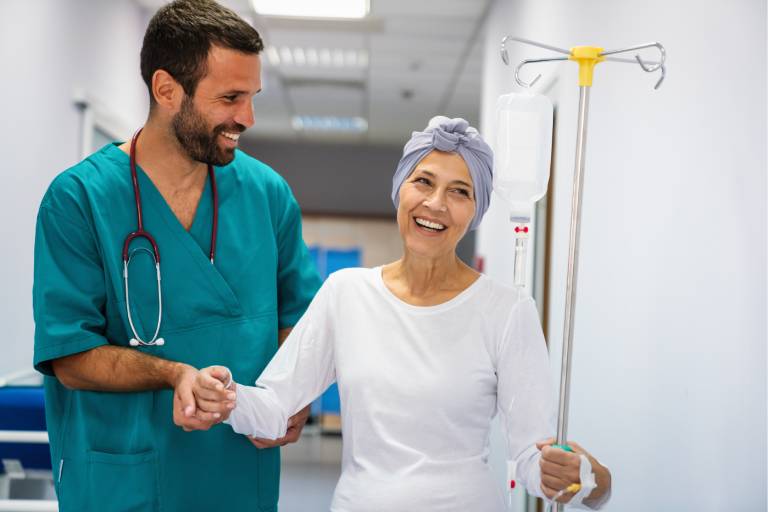
In your role as an oncology nurse, patient care remains your primary responsibility. Your tasks might range from administering treatments and medications to monitoring patient conditions and managing symptoms of side effects. This role may also encompass providing emotional support for patients and their families, helping them cope with the challenges of a cancer diagnosis.
Direct Patient Care
The day-to-day duties of person-centered care often include assessing a patient’s physical condition, managing pain, administering chemotherapy, and providing detailed explanations of treatments and possible side effects. You may work closely with a team of healthcare professionals, such as physicians, social workers, and dietitians, to come up with a comprehensive care plan for your patients.
Several specialty roles exist within the broader scope of oncology nursing as well. For instance, you might opt to focus on pediatric oncology, gynecologic oncology, or hematologic oncology, among others. Each specialization involves additional knowledge and training specific to those subsets of cancer care.
Education and Counseling
As an oncology nurse, you’re also tasked with educating patients and their families about the disease, treatment options, potential side effects, and the overall prognosis. You may be responsible for offering advice on lifestyle changes that could improve patients’ well-being and enhance their comfort during their treatment. Your role extends to counseling patients and their families, helping them navigate through the emotional toll of a cancer diagnosis.
Research
You may be involved in clinical research aiming to find better ways to prevent, diagnose, and treat cancer. As an integral part of the research team, you may collect data, assist in analyses, ensure that research protocols are adhered to, and help patients understand their participation in these studies.
While managing these responsibilities, it’s essential to abide by the established ethical guidelines and provide competent and respectful care.
Leadership Roles
As an experienced oncology nurse, you might move into leadership roles as well, such as becoming a charge nurse or a unit manager. These roles often involve overseeing operations, managing staff, and coordinating care delivery across multidisciplinary teams. Further education, such as obtaining a Master of Science in Nursing (MSN) or a Doctor of Nursing Practice (DNP), can open doors to executive roles or advanced nurse practitioner positions.
As you progress in your nursing career, your roles and responsibilities may change and expand, offering you opportunities for continuous professional growth.
Specialties Within Oncology Nursing
As you delve deeper into your nursing career, you may wish to specialize in oncology nursing. Within this field, there’s a variety of specializations available you could pursue.
Surgical Oncology Nursing
As a surgical oncology nurse, you’d assist in surgical procedures for patients battling cancer. Your responsibilities would include preoperative care, assisting during the surgery itself, and providing postoperative care. You’d also have essential roles in patient teaching, pain management, and wound care.
Radiation Oncology Nursing
In radiation oncology, you’d work with patients undergoing radiation therapy. Your role could vary from assisting radiation oncologists, managing the side effects of radiation therapy, to providing emotional support for the patients and their families.
Pediatric Oncology Nursing
Pediatric oncology nurses work exclusively with children and adolescents diagnosed with cancer. In this field, you’d hold a special place in these youngsters’ treatment journey, providing not only medical care but also emotional support. Due to the patient’s age group, a deep understanding of child development and family dynamics is required.
Gynecologic Oncology Nursing
If you choose to venture into gynecologic oncology nursing, your focus will be on women with reproductive cancers. Patient education and providing emotional support during all phases of treatment are essential in this field.
Hematologic Oncology Nursing
As a hematologic oncology nurse, you’d care for patients with blood cancers and disorders. This could include diseases like leukemia, lymphoma, and myeloma. Coupled with general oncology nursing skills, knowledge about bone marrow and stem cell transplants might be a part of your daily routine.
Whichever specialty you choose within oncology nursing, your role will be crucial in guiding patients through one of the most challenging phases of their lives. Your specialized knowledge and compassionate care will be their steadfast support.
Oncology Nurse Practitioner Career Path
An oncology nurse practitioner is an advanced practice registered nurse (APRN) who specializes in caring for patients diagnosed with cancer. They have advanced education and training in oncology, which allows them to provide comprehensive care to cancer patients. This includes assessing patients, ordering and interpreting diagnostic tests, prescribing medications, developing and implementing treatment plans, managing side effects of treatment, and providing emotional support to patients and their families. To take on the role of an oncology nurse practitioner, you’ll first need to become a registered nurse (RN). This is an important first step in your career path.
Becoming a Registered Nurse
To become an RN, enrolling in an associate or bachelor’s degree program in nursing is essential, followed by successfully passing the NCLEX-RN, the national licensing exam for registered nurses.
Afterward, gaining experience in oncology as a registered nurse is vital before proceeding any further. This is due to the specialized nature of oncology, which requires a sound understanding of cancer treatment and patient care.
Advancing to Oncology Nurse Practitioner
Once you’re an experienced oncology RN, you’ll want to consider advancing your education. Obtaining a Master of Science in Nursing (MSN) or higher in an oncology-focused program is your next step.
While studying for your MSN, concentrating on oncology can better prepare you for the role of an oncology nurse practitioner. Coursework may include specific diseases, treatment modalities, and the impact of cancer on patients and their families, to name a few.
After earning your MSN, you’ll need to acquire licensure to be a nurse practitioner in your state. Requirements differ by state, but you’ll generally need to pass a national certification exam. Certification as an Oncology Certified Nurse (OCN) is recommended and often required—this demonstrates your understanding and commitment to the oncology specialty.
Expanded Scope of Practice
As an oncology nurse practitioner, your scope of practice will expand. With the ability to diagnose and treat cancer patients independently or in conjunction with a physician, your responsibilities will include prescribing medication, ordering tests, offering post- and pre-operative care, and providing emotional support to patients and their families.
Additionally, oncology nurse practitioners often engage in research, education, and advocacy for cancer patients. You might also find yourself helping shape health policy or contributing to the improvement of patient care processes.
Keep in mind that becoming an oncology nurse practitioner is a journey. It requires dedication and advanced education. Yet, the direct positive impact you can have on patients’ lives can make this career path incredibly rewarding.
Benefits of Pursuing a Career in Oncology Nursing
You’ll find that one of the most rewarding aspects of oncology nursing is the profound effect you can have on people’s lives. In this field, you’re not just administering treatments; you’re helping patients navigate the fear, anxiety, and uncertainty that often accompany a cancer diagnosis.
Personal Rewards
Developing deep emotional bonds is often the norm, rather than the exception, in oncology nursing. You’ll have the opportunity to form meaningful connections with your patients and their families, providing them comfort and support during a challenging time.
Over the course of your career in oncology nursing, these personal relationships can enhance your capacity for empathy, promote emotional growth, and provide a deeper understanding of the fragility and resilience of the human spirit. In fact, many oncology nurses report that their work offers them a unique perspective on the value of life and health, which can enrich their personal relationships and day-to-day experiences outside of work.
Professional Rewards
Notably, oncology nursing offers numerous opportunities for professional growth and advancement as well. Given the complexity of cancer care, there’s always something new to learn. You’ll find yourself continually expanding your knowledge base on various types of cancers, treatment protocols, patient education, and symptom management.
Cancer research is an ever-evolving field, meaning your role as an oncology nurse will never be stagnant. You’ll have the chance to stay up-to-date with the latest advancements in oncology care, which often involves attending or even presenting at industry conferences and seminars.
Additionally, oncology nursing can open doors to a variety of specializations and advancements in your career. You could choose to specialize in a specific type of cancer, become involved in research, take on a nurse educator role, or climb the ranks to a nurse manager position.
Financial Benefits
Oncology nursing also tends to be financially rewarding. Due to the specialized nature of this field, oncology nurses often command higher salaries compared to other nursing specialties. Moreover, many employers offer additional benefits such as sign-on bonuses, tuition reimbursement for advanced degrees, and scholarships for ongoing education.
A career in oncology nursing provides an assortment of personal and professional benefits. It offers you the opportunity to make a meaningful difference in the lives of others, immerse yourself in a vital and rapidly advancing field of healthcare, forge a clear path for career advancement, and enjoy financial stability.
Challenges in Oncology Nursing and Ways to Overcome Them
While there are many benefits to working in oncology that were mentioned, there are also associated challenges, such as emotional stress, death and grief, rapid advancements in the field, and workload and staffing issues.
Dealing With Emotional Stress
As an oncology nurse, you’ll likely face emotional stress as you are helping patients through what is possibly the most challenging time in their lives. This stress can often lead to burnout if not managed properly. Maintaining a healthy work-life balance is critical, and seeking support when needed, like counseling or therapy, can be beneficial. It might also be helpful to join professional organizations such as the Oncology Nursing Society, where you can connect with other oncology nurses who can understand and help navigate your experiences.
Handling Patient Death and Grief
Dealing with patient death and grieving families can be particularly challenging. It’s important to remember that grieving is a part of your role. Don’t shy away from expressing genuine empathy and compassion. Bereavement training can equip you with strategies to provide patients and families with the support they need during these times.
Keeping up With Rapid Advancements in Cancer Care
With cancer research progressing at a rapid pace, staying up-to-date with the latest advancements can be a daunting task. Taking advantage of continuous education opportunities and attending relevant workshops, seminars, and conferences can help you stay informed. Also, subscribing to professional journals can keep you updated with the latest in oncology research and treatment options.
Ensuring Accurate Medication Administration
Administering chemotherapy drugs requires precision. Misadministration can have significant consequences. Regularly reviewing your patients’ medication list, doses, and the times they’re supposed to take them can reduce the risk of medication errors. Also, taking additional certification in chemotherapy administration can provide the needed skills and competence.
Coping With Workload and Staffing Issues
Experiencing high patient loads and staffing shortages can be stressful. Efficient time management and delegation skills are crucial in handling this challenge. By staying organized and prioritizing tasks, you can ensure you meet your patient’s needs without feeling overwhelmed.
Remember, advocating for adequate staffing levels and positive working conditions is always important—both for your own well-being and that of your patients.
As you navigate through these challenges, it’s okay to seek support, and it’s critical to take care of your own emotional and physical health as well. Through proper training and support, these hurdles can be effectively managed and even bridged.
Continuing Education and Certification Opportunities in Oncology Nursing
Continuing education and certification greatly contribute to the professional growth of oncology nurses. By attending regular trainings, workshops, and conferences, you have the chance to stay updated with the newest knowledge and guidelines in the field. A continuous learning process makes you more comfortable in your role as a nurse, more confident in your interactions with patients, and more competent as a healthcare provider.
Advanced Certification in Oncology Nursing
Obtaining an advanced certification in oncology nursing, such as Oncology Certified Nurse (OCN) or Advanced Oncology Certified Nurse (AOCN), is also being increasingly recognized for its importance. These certifications give your professional profile an added boost and makes your skills more visible to employers. It’s evidence of your commitment to the profession and to patient care.
Certification as an oncology nurse requires passing an examination, which validates your specialized knowledge and skills. To be eligible for the exam, the Oncology Nursing Certification Corporation requires that you have completed at least two years full-time as a registered nurse and at least 2,000 hours of specialty nursing practice in oncology care within the past three years.
Enhanced Career Opportunities Through Continuing Education
By expanding your knowledge and achieving an advanced certification, your career opportunities in oncology nursing also widen. You may be given greater responsibilities in patient care, be involved in research or educational projects, or take leadership roles in oncology nursing.
In addition, more credentials may also increase your pay scale. Oncology nurses with a specialized certification earn around 10% more than those who do not have a certification, according to the Oncology Nursing Society.
Investing in continuing education and earning an advanced certification in oncology nursing will not only improve your skills, confidence, and competence, but also open doors to more fulfilling career opportunities.